
Early Signs of Cervical Cancer Every Woman Should Know | Dr. Amit Mandal Kolkata
Posted on: May 10, 2026
Early Signs of Cervical Cancer Every Woman Should Know – A Doctors Perspective by Dr. Amit Mandal
Cervical cancer is one of the few cancers that can often be detected early and treated effectively when diagnosed on time. However, in many women, the early symptoms are either ignored or mistaken for common gynecological problems.
In my clinical experience, one of the biggest challenges is that cervical cancer may not cause severe symptoms in the beginning. Many patients continue with daily life, assuming the changes they notice are temporary or hormonal.
Awareness is extremely important because early diagnosis significantly improves treatment outcomes.
Understanding cervical cancer
Cervical cancer develops in the cervix, which is the lower part of the uterus connecting to the vagina. In most cases, it is associated with long-term infection by certain types of the human papillomavirus (HPV).
The disease usually develops slowly, which means warning signs may appear months or even years before advanced cancer develops.
This is why regular screening and attention to symptoms are important.
Common early signs women should not ignore
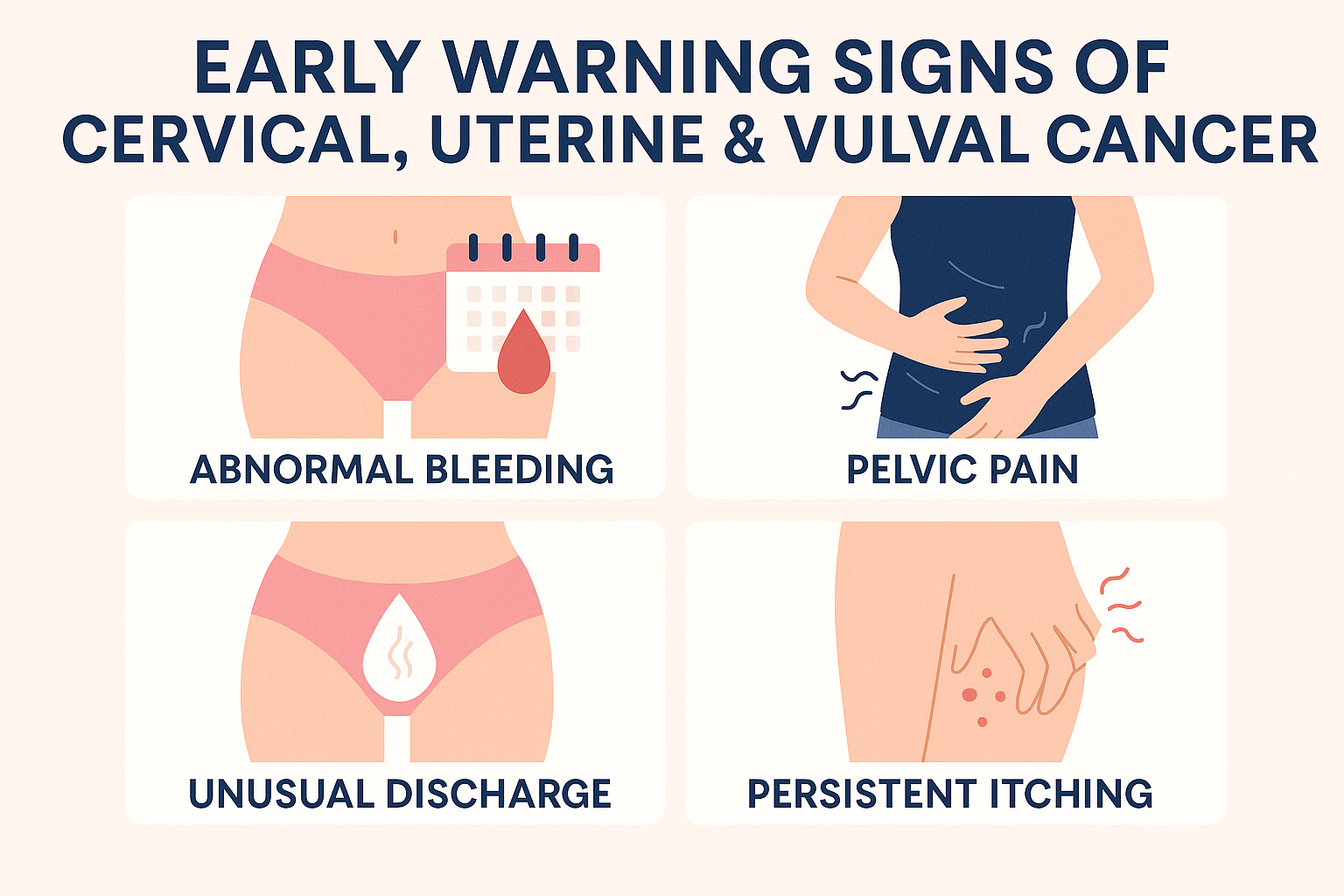
In the early stages, symptoms may appear mild or irregular. Some of the most common warning signs include:
- Bleeding between periods
- Bleeding after intercourse
- Bleeding after menopause
- Persistent white or watery discharge
- Lower abdominal or pelvic pain
These symptoms do not always mean cancer, but they should never be ignored.
One important warning sign is irregular bleeding after the age of 40. If you are experiencing this symptom, read our detailed guide on irregular bleeding after 40 and cancer risk.
Why women often delay consultation
Many women assume abnormal bleeding is related to stress, weakness, menopause, or hormonal imbalance. Some feel embarrassed discussing gynecological symptoms, while others wait for symptoms to become severe before seeking help.
Unfortunately, delayed consultation can allow the disease to progress silently.
One of the most important things I tell my patients is this: mild symptoms do not always mean a mild condition.
A clinical observation from practice
I have seen patients who ignored spotting after intercourse for several months because the bleeding was minimal and painless. Later evaluation revealed early cervical abnormalities requiring treatment.
At the same time, I have also seen patients who came early with mild symptoms and were relieved to learn that timely treatment prevented progression.
These experiences highlight the importance of early evaluation.
Persistent discharge can also be an important symptom. If you are noticing unusual discharge, read our article on white discharge in women and when it could be serious.
Symptoms that may appear as the disease progresses
- Persistent pelvic pain
- Pain during intercourse
- Heavy or prolonged bleeding
- Fatigue and weakness
- Loss of appetite or weight loss
These symptoms require immediate medical attention.
Lower abdominal pain is another symptom women often ignore. You may also want to read our guide on lower abdominal pain in women and when to worry.
Who is at higher risk of cervical cancer
- Persistent HPV infection
- Smoking
- Weak immune system
- Multiple sexual partners
- Lack of regular cervical screening
Women with these risk factors should be particularly careful about regular check-ups.
How cervical cancer is diagnosed
Diagnosis is based on systematic evaluation and screening.
- Pap smear test
- HPV testing
- Pelvic examination
- Colposcopy if required
- Biopsy for confirmation
These tests help identify abnormal changes early, often before cancer fully develops.
Why early diagnosis matters
Cervical cancer is highly treatable when detected at an early stage.
Early diagnosis often means:
- Less aggressive treatment
- Better recovery outcomes
- Reduced complications
- Higher long-term survival rates
Delayed diagnosis can require more extensive treatment and may affect overall outcomes.
Can cervical cancer be prevented?
In many cases, yes.
Preventive steps include:
- Regular Pap smear screening
- HPV vaccination
- Timely treatment of precancerous changes
- Not ignoring abnormal symptoms
Prevention and awareness together play a major role in reducing risk.
Who should consult a specialist
- Women with abnormal bleeding
- Persistent vaginal discharge
- Pain during intercourse
- Pelvic pain lasting several weeks
- Women above 40 with new gynecological symptoms
If you are experiencing these symptoms, consultation with a specialist such as Dr. Amit Mandal can help ensure accurate diagnosis and timely treatment.
A message for women in Kolkata
In busy daily life, many women delay health check-ups until symptoms interfere with routine activities. However, gynecological symptoms should not be ignored or normalized without evaluation.
Early consultation provides clarity, reassurance, and timely care when needed.
Common misconceptions about cervical cancer
One misconception is that cervical cancer always causes severe pain in the beginning. In reality, early stages may produce only mild symptoms or no pain at all.
Another misunderstanding is that only older women are affected. While risk increases with age, younger women can also develop cervical abnormalities.
Regular screening remains important regardless of age.
A practical approach every woman should follow
- Pay attention to abnormal bleeding or discharge
- Do not ignore persistent pelvic pain
- Schedule regular cervical screening
- Seek medical advice when symptoms appear
These simple steps can make a significant difference in long-term health outcomes.
Final words from clinical experience
Over the years, I have seen many women benefit from early diagnosis and timely treatment. I have also seen how delayed consultation can complicate management unnecessarily.
Cervical cancer often gives warning signs early. The important thing is recognizing those signs and acting without delay.
Your health should never be postponed.
What you should do next
If you are experiencing symptoms that concern you, do not rely on assumptions or home remedies alone.
Consult a qualified specialist, understand the cause, and take timely action.
Early diagnosis can protect your health and significantly improve treatment outcomes.
Recent Posts
-
 Best Uterine Cancer Treatment in Kolkata: Expert Care & Advanced Therapies
-
 Top Cervical Cancer Doctor in Kolkata | Best Treatment & HPV Prevention
-
 Best Vulval Cancer Doctor in Kolkata: When & Where to Seek Help
-
 Endometrial cancer treatment in Kolkata | Dr. Amit Mandal
-
Menopausal Bleeding - A Warning Sign of Uterine Cancer? Symptoms & Treatment
Comments (0)
Post Your Comment