
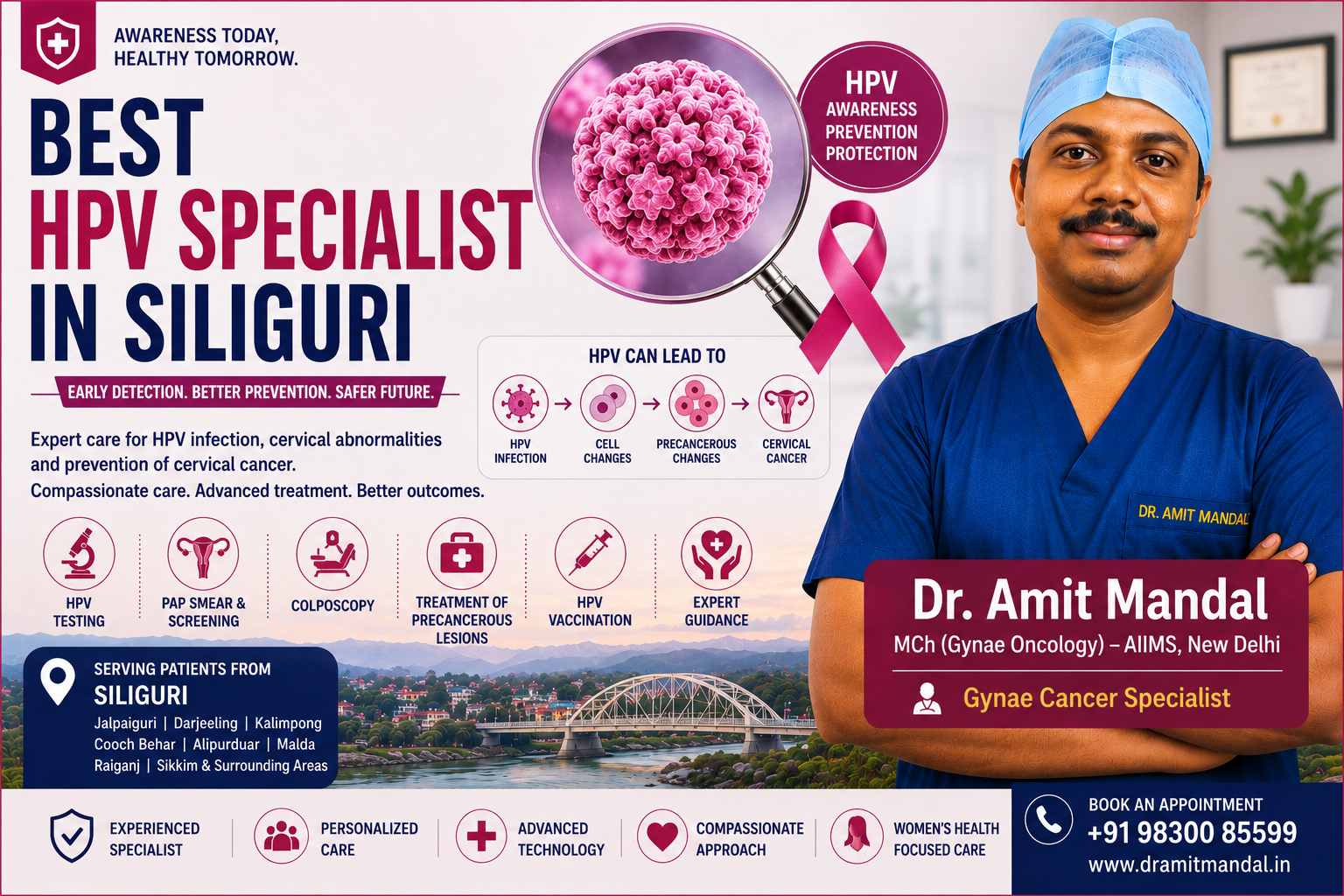
Best HPV Specialist in Siliguri | HPV Infection & Cervical Cancer Expert | Dr. Amit Mandal
Posted on: Jul 19, 2026
Best HPV Specialist in Siliguri – Expert HPV & Cervical Cancer Care by Dr. Amit Mandal
Human Papillomavirus (HPV) is one of the most common viral infections affecting women across the world. Most HPV infections disappear naturally without causing serious problems. However, persistent infection with high-risk HPV types can increase the risk of cervical cancer and certain other gynecological cancers.
Many women are surprised when they receive a positive HPV report because they often have no symptoms. This is why awareness, routine screening, and timely consultation with a specialist are so important.
If you are looking for the Best HPV Specialist in Siliguri, consulting an experienced Gynaecological Oncologist can help you understand your diagnosis, reduce anxiety, and receive the most appropriate care.
Women from Siliguri, Jalpaiguri, Darjeeling, Kalimpong, Cooch Behar, Alipurduar, Malda, Raiganj, and Sikkim frequently seek consultation with Dr. Amit Mandal for HPV-related diseases, cervical abnormalities, and gynecological cancer prevention.
About Dr. Amit Mandal
Dr. Amit Mandal is an AIIMS New Delhi-trained Gynaecological Oncologist with specialized training in cervical cancer prevention, HPV-related diseases, and gynecological cancer treatment. His clinical practice focuses on early diagnosis, evidence-based treatment, and preventive women's healthcare.
His areas of expertise include:
- HPV infection management
- Abnormal PAP smear evaluation
- Colposcopy
- Treatment of precancerous cervical lesions
- Cervical cancer treatment
- Uterine cancer treatment
- Ovarian cancer treatment
- Preventive Gynaecological Oncology
What is HPV?
Human Papillomavirus is a group of more than 100 related viruses. Some types cause common skin warts, while certain high-risk HPV types are associated with cervical cancer, vaginal cancer, vulval cancer, anal cancer, and some throat cancers.
HPV infection is extremely common, and in many cases, the body's immune system clears the infection naturally. However, when high-risk HPV persists for several years, it may lead to abnormal changes in cervical cells.
Who Should Consider HPV Testing?
- Women with abnormal PAP smear reports
- Women above the recommended screening age
- Women with persistent cervical abnormalities
- Patients advised by their gynecologist
- Women requiring follow-up after cervical treatment
Symptoms of HPV Infection
Most HPV infections do not produce any symptoms, which is why regular screening is essential. In some cases, women may develop genital warts or abnormal cervical changes that are detected only during routine examination.
HPV itself usually cannot be diagnosed based on symptoms alone.
How HPV Is Diagnosed
- HPV DNA Test
- PAP Smear
- Colposcopy
- Cervical Biopsy (if required)
These investigations help determine whether abnormal cervical changes are present and guide further treatment.
Can HPV Be Prevented?
Yes. Vaccination and regular screening have significantly reduced cervical cancer rates in many countries.
- HPV Vaccination
- Routine PAP Smear Screening
- HPV DNA Testing
- Timely Treatment of Precancerous Lesions
- Regular Gynecological Check-ups
HPV vaccination is most effective before exposure to the virus but may still provide benefits in appropriate age groups as advised by your doctor.
When Should You Consult an HPV Specialist?
- Positive HPV DNA report
- Abnormal PAP smear
- Persistent cervical infection
- Repeated abnormal screening reports
- Concerns regarding cervical cancer prevention
Women experiencing irregular bleeding should also read Irregular Bleeding After 40: Is It Cancer?.
If you have persistent vaginal discharge, read White Discharge in Women: When It Could Be Serious.
Frequently Asked Questions
Is HPV always dangerous?
No. Most HPV infections resolve naturally. Only persistent infection with certain high-risk HPV types increases the risk of cervical cancer.
Can HPV infection be treated?
There is no treatment that removes HPV itself, but abnormal cervical changes caused by HPV can often be treated successfully when detected early.
Can HPV vaccination prevent cervical cancer?
HPV vaccination significantly reduces the risk of cervical cancer caused by the HPV types covered by the vaccine.
Who should consult an HPV specialist?
Women with positive HPV tests, abnormal PAP smear reports, or concerns about cervical cancer prevention should seek specialist consultation.
Conclusion
HPV infection is common, but it does not have to become a serious health problem. Regular screening, timely vaccination, and expert medical guidance play a vital role in preventing cervical cancer.
Women from Siliguri and North Bengal seeking expert care for HPV infection, cervical abnormalities, or cancer prevention can consult Dr. Amit Mandal for comprehensive evaluation and personalized treatment.
Early awareness and regular screening remain the most effective ways to protect women's health.
Recent Posts
-
 Best Uterine Cancer Treatment in Kolkata: Expert Care & Advanced Therapies
-
 Top Cervical Cancer Doctor in Kolkata | Best Treatment & HPV Prevention
-
 Best Vulval Cancer Doctor in Kolkata: When & Where to Seek Help
-
 Endometrial cancer treatment in Kolkata | Dr. Amit Mandal
-
Menopausal Bleeding - A Warning Sign of Uterine Cancer? Symptoms & Treatment
Comments (0)
Post Your Comment