
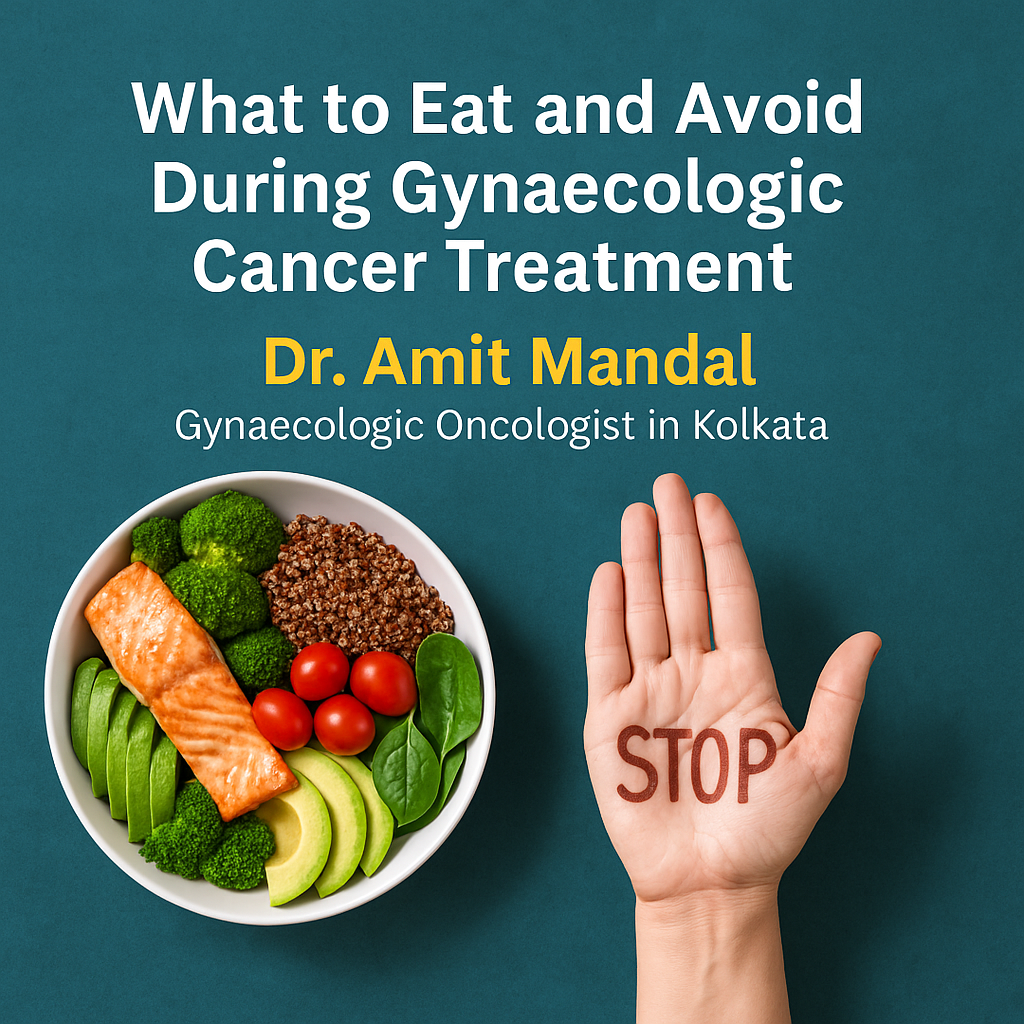
What to Eat During Gynaecologic Cancer Treatment | Dr. Amit Mandal
Posted on: Oct 07, 2025
What to Eat and Avoid During Gynaecologic Cancer Treatment
Proper nutrition plays a vital role during gynecologic cancer treatment. The right diet can help manage side effects, boost immunity, and improve recovery. Women undergoing treatment for ovarian, uterine, cervical, or vaginal cancers should focus on eating nutrient-rich foods that support healing and maintain strength. For expert consultation, visit Dr. Amit Mandal, Consultant Gynaecologic Oncologist in Kolkata.
Why Nutrition Matters During Cancer Treatment
During treatment, your body needs extra energy and nutrients to repair tissues and fight fatigue. Eating well can help you:
- Maintain a healthy weight and muscle mass
- Reduce treatment side effects like nausea and fatigue
- Strengthen your immune system
- Recover faster after surgery, chemotherapy, or radiation
Foods to Eat During Gynaecologic Cancer Treatment
A balanced diet helps your body tolerate treatment better. Focus on foods that are rich in protein, vitamins, and fiber while being easy to digest.
- Protein-Rich Foods: Eggs, lentils, paneer, tofu, chicken, and fish for tissue repair.
- Fruits and Vegetables: Include spinach, carrots, beetroot, pumpkin, apples, guava, and papaya for antioxidants.
- Whole Grains: Brown rice, oats, quinoa, and whole wheat for sustained energy.
- Healthy Fats: Olive oil, nuts, flaxseeds, and avocados to reduce inflammation.
- Iron-Rich Foods: Beetroot, spinach, dates, and chickpeas to prevent anemia.
- Hydration: Drink coconut water, soups, and herbal teas to flush out toxins.
Foods to Avoid During Treatment
Some foods may worsen side effects or interfere with medications. Avoid:
- Raw or undercooked foods and street food
- Processed snacks, refined sugar, and carbonated drinks
- Red and processed meats
- Spicy, fried, or oily dishes
- Alcohol and tobacco
Managing Side Effects Through Diet
- Nausea: Eat small, frequent meals; prefer dry snacks like toast or puffed rice.
- Mouth Sores: Choose soft foods like soups, porridge, and khichdi.
- Loss of Appetite: Try smoothies, shakes, and protein-rich snacks between meals.
- Constipation: Add more fiber and drink 8-10 glasses of water daily.
Natural Immune Boosters
- Turmeric (curcumin) to reduce inflammation
- Ginger for nausea and digestion
- Garlic for immune support
- Tulsi and green tea for antioxidants
Lifestyle Tips for Better Recovery
- Eat small, frequent meals throughout the day
- Include light exercise like walking or yoga
- Sleep at least 7-8 hours every night
- Avoid self-medication or extreme diets
- Stay emotionally supported and positive
When to Consult a Gynaecologic Oncologist
If you experience bloating, abdominal discomfort, post-menopausal bleeding, or abnormal discharge, consult a gynaecologic oncologist in Kolkata immediately. Early consultation with a specialist like Dr. Amit Mandal ensures timely diagnosis and proper treatment for ovarian, uterine, cervical, and vulvar cancers.
Conclusion
Nutrition is a powerful companion in the fight against cancer. Eating a healthy, balanced diet helps women manage side effects, recover faster, and feel stronger during treatment. For a personalized diet and treatment plan, consult Dr. Amit Mandal, Gynaecologic Oncologist in Kolkata- dedicated to holistic care and womens wellness.
Recent Posts
-
 Best Uterine Cancer Treatment in Kolkata: Expert Care & Advanced Therapies
-
 Top Cervical Cancer Doctor in Kolkata | Best Treatment & HPV Prevention
-
 Best Vulval Cancer Doctor in Kolkata: When & Where to Seek Help
-
 Endometrial cancer treatment in Kolkata | Dr. Amit Mandal
-
Menopausal Bleeding - A Warning Sign of Uterine Cancer? Symptoms & Treatment
Comments (0)
Post Your Comment