
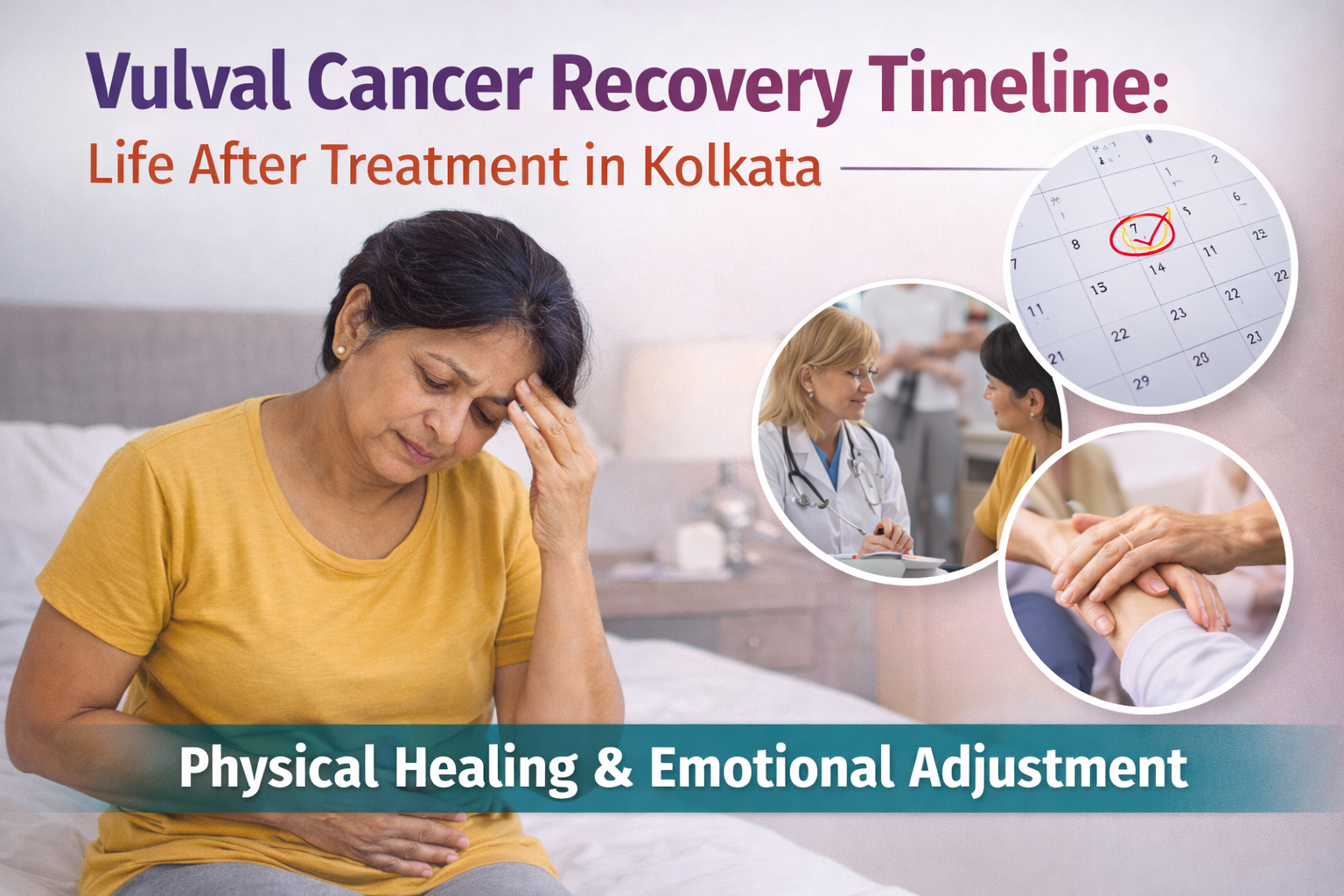
Vulval Cancer Recovery Timeline: Life After Treatment in Kolkata
Posted on: Feb 18, 2026
Vulval Cancer Recovery Timeline: What to Expect Physically & Emotionally After Treatment
For many women in Kolkata, completing vulval cancer treatment marks the end of an intense medical journey — but the recovery phase often raises new questions. How long will healing take? When will daily life feel normal again? Is emotional vulnerability part of recovery? Understanding the recovery timeline after vulval cancer treatment helps patients prepare realistically and regain confidence step by step.
The First Few Weeks After Surgery or Radiation
In the initial weeks after treatment, the body focuses on wound healing and inflammation control. Women may experience swelling, tenderness, fatigue, or mild difficulty while sitting or walking. Proper wound care, hygiene, and limited physical strain are essential during this period. Guidance from experienced teams such as those discussed in Best Vulval Cancer Specialist Doctor in Kolkata can help ensure smoother early recovery.
One to Three Months: Gradual Physical Adjustment
As healing progresses, most women notice reduced pain and improved mobility. However, sensitivity changes in the vulval area may persist. Some women report tightness or dryness, especially after radiation therapy. Gentle physiotherapy, gradual exercise, and proper skin care routines can improve long-term comfort and mobility.
Emotional Phases of Recovery
Emotionally, recovery does not follow a straight line. Some women feel relief immediately after treatment, while others experience anxiety before each follow-up visit. Fear of recurrence, body image concerns, or mood fluctuations are common. Emotional support from family and healthcare providers is just as important as physical healing.
Rebuilding Intimacy and Sexual Confidence
Sexual health recovery varies widely among individuals. Some women resume intimacy within months, while others require more time to rebuild comfort and confidence. Honest conversations with partners and healthcare professionals reduce fear and help set realistic expectations. Over time, many couples find new ways to restore emotional closeness and physical intimacy.
Monitoring for Recurrence
Follow-up appointments typically include physical examinations and symptom review. Early detection of recurrence significantly improves treatment outcomes. Women who have experienced other gynecological cancers or want broader awareness may also benefit from understanding related care pathways discussed in Best Cervical Cancer Specialist in Kolkata and Endometrial Cancer Treatment in Kolkata.
Returning to Work and Social Life
Energy levels may fluctuate for months after treatment. A gradual return to work and social activities helps prevent exhaustion. Many survivors report that structured routines and supportive workplaces play a key role in regaining independence and confidence.
Long-Term Survivorship and Self-Care
Survivorship is a continuous journey. Healthy diet, regular exercise, mental wellness practices, and ongoing medical follow-up help maintain long-term health. Women who stay informed about their bodies and maintain open communication with their care teams often feel more empowered during survivorship.
Recent Posts
-
 Best Uterine Cancer Treatment in Kolkata: Expert Care & Advanced Therapies
-
 Top Cervical Cancer Doctor in Kolkata | Best Treatment & HPV Prevention
-
 Best Vulval Cancer Doctor in Kolkata: When & Where to Seek Help
-
 Endometrial cancer treatment in Kolkata | Dr. Amit Mandal
-
Menopausal Bleeding - A Warning Sign of Uterine Cancer? Symptoms & Treatment
Comments (0)
Post Your Comment