
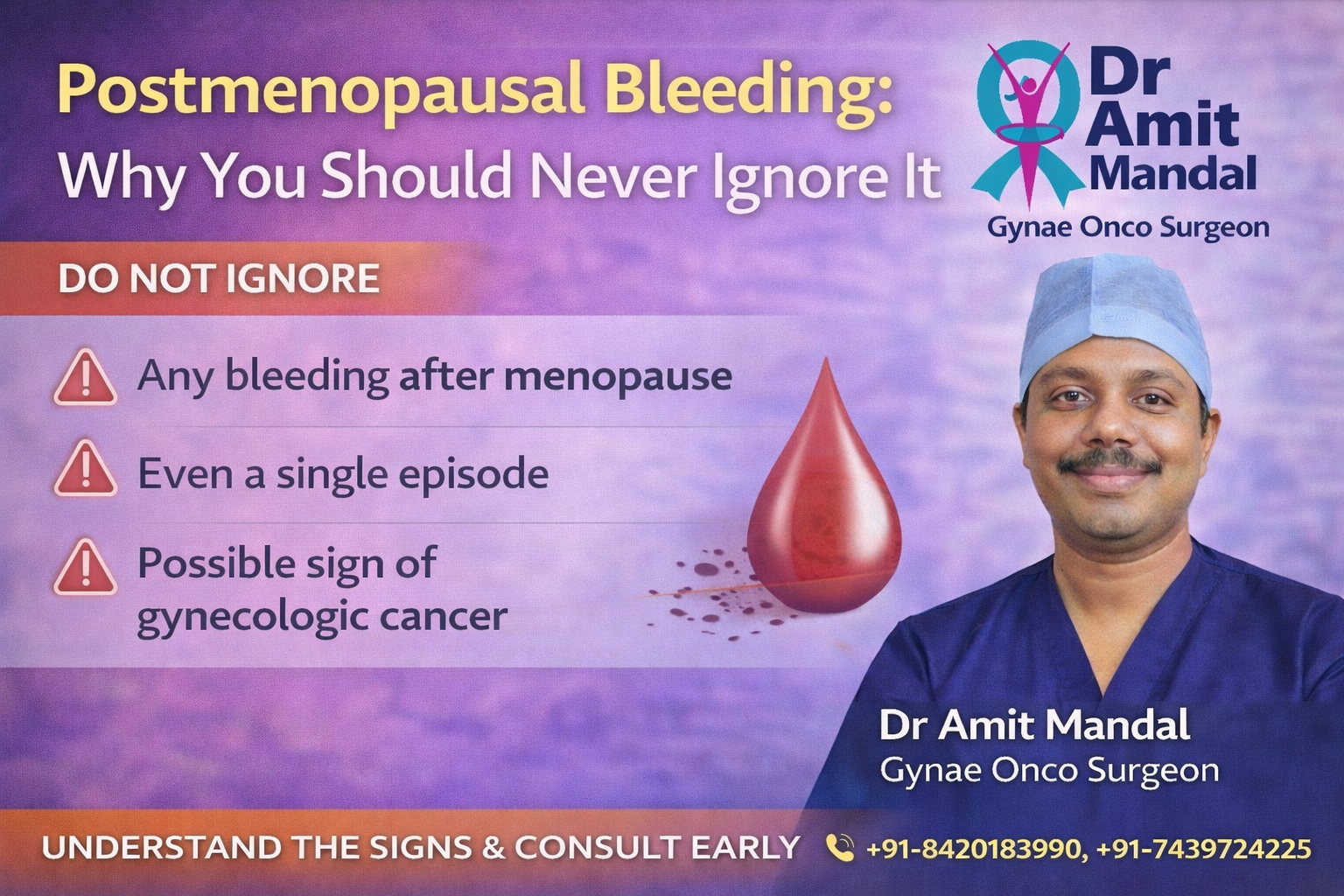
Postmenopausal Bleeding: Why You Should Never Ignore It
Posted on: Jan 20, 2026
Postmenopausal Bleeding: Why You Should Never Ignore Even One Episode
Any vaginal bleeding after menopause is abnormal. Even a single episode of spotting—no matter how light—should never be ignored. Many women assume postmenopausal bleeding is due to age-related changes or minor infections, but in reality, it can be an early warning sign of gynecologic cancer.
In this blog, Dr. Amit Mandal, an experienced Gynae Onco Surgeon in Kolkata, explains why postmenopausal bleeding requires immediate medical evaluation and how early diagnosis can save lives.
What Is Considered Postmenopausal Bleeding?
Menopause is defined as the absence of menstrual periods for 12 consecutive months. Any vaginal bleeding—spotting, brown discharge, or fresh blood—occurring after this period is considered postmenopausal bleeding.
Dr. Amit Mandal stresses that there is no such thing as “normal bleeding” after menopause.
Common Causes of Postmenopausal Bleeding
Not all causes are cancerous, but all require evaluation.
- Vaginal or uterine lining thinning (atrophy)
- Hormone replacement therapy side effects
- Endometrial or cervical polyps
- Infections or inflammation
- Gynecologic cancers
The challenge is that early cancer-related bleeding may look exactly like benign bleeding.
Why Postmenopausal Bleeding Is a Red Flag for Cancer
Postmenopausal bleeding is one of the earliest and most common symptoms of uterine (endometrial) cancer.
It may also indicate:
- Cervical cancer
- Vaginal cancer
- Vulval cancer
According to Dr. Amit Mandal, many gynecologic cancers are detected early *because* women reported bleeding promptly.
How Often Is Cancer Found in Postmenopausal Bleeding?
Studies show that approximately 10–15% of women with postmenopausal bleeding are diagnosed with endometrial cancer.
This means that while most cases are not cancer, the risk is too significant to ignore.
Why Delaying Evaluation Can Be Dangerous
- Early-stage cancer may progress silently
- Treatment options become more aggressive
- Recovery time increases
- Survival rates decrease
Dr. Mandal emphasizes that early-stage uterine cancer has an excellent cure rate when treated promptly.
How Dr. Amit Mandal Evaluates Postmenopausal Bleeding
Evaluation is systematic, accurate, and patient-focused.
- Detailed medical and hormone history
- Pelvic examination
- Transvaginal ultrasound
- Endometrial thickness assessment
- Biopsy if indicated
These investigations help rule out cancer or confirm it at a treatable stage.
Can Postmenopausal Bleeding Be Treated Without Surgery?
Yes—if diagnosed early.
Depending on the cause, treatment may include:
- Hormonal therapy
- Minor procedures for polyps
- Minimally invasive surgery
- Radiotherapy in selected cases
Early diagnosis often avoids major surgery.
Real Patient Experience
“I noticed light spotting once and almost ignored it. After consulting Dr. Amit Mandal, tests revealed early uterine cancer. Because it was caught early, my treatment was simple and successful.” — Patient from Dum Dum, Kolkata
Who Should Seek Immediate Evaluation?
- Any woman with bleeding after menopause
- Women on hormone replacement therapy
- Those with obesity or diabetes
- Women with family history of gynecologic cancer
Even one episode is enough to warrant consultation.
FAQs
- Can postmenopausal bleeding stop on its own? It may, but it still requires evaluation.
- Is light spotting also serious? Yes, even minimal spotting can signal cancer.
- Is biopsy painful? No, it is a quick and well-tolerated procedure.
- Can cancer be cured if detected early? Yes, cure rates are very high.
Conclusion
Postmenopausal bleeding is never normal and should never be ignored. Early evaluation can mean the difference between simple treatment and advanced cancer care.
If you or a loved one has experienced bleeding after menopause, consult Dr. Amit Mandal, a trusted Gynae Onco Surgeon in Kolkata, for timely diagnosis and personalized care.
Recent Posts
-
 Best Uterine Cancer Treatment in Kolkata: Expert Care & Advanced Therapies
-
 Top Cervical Cancer Doctor in Kolkata | Best Treatment & HPV Prevention
-
 Best Vulval Cancer Doctor in Kolkata: When & Where to Seek Help
-
 Endometrial cancer treatment in Kolkata | Dr. Amit Mandal
-
Menopausal Bleeding - A Warning Sign of Uterine Cancer? Symptoms & Treatment
Comments (0)
Post Your Comment