
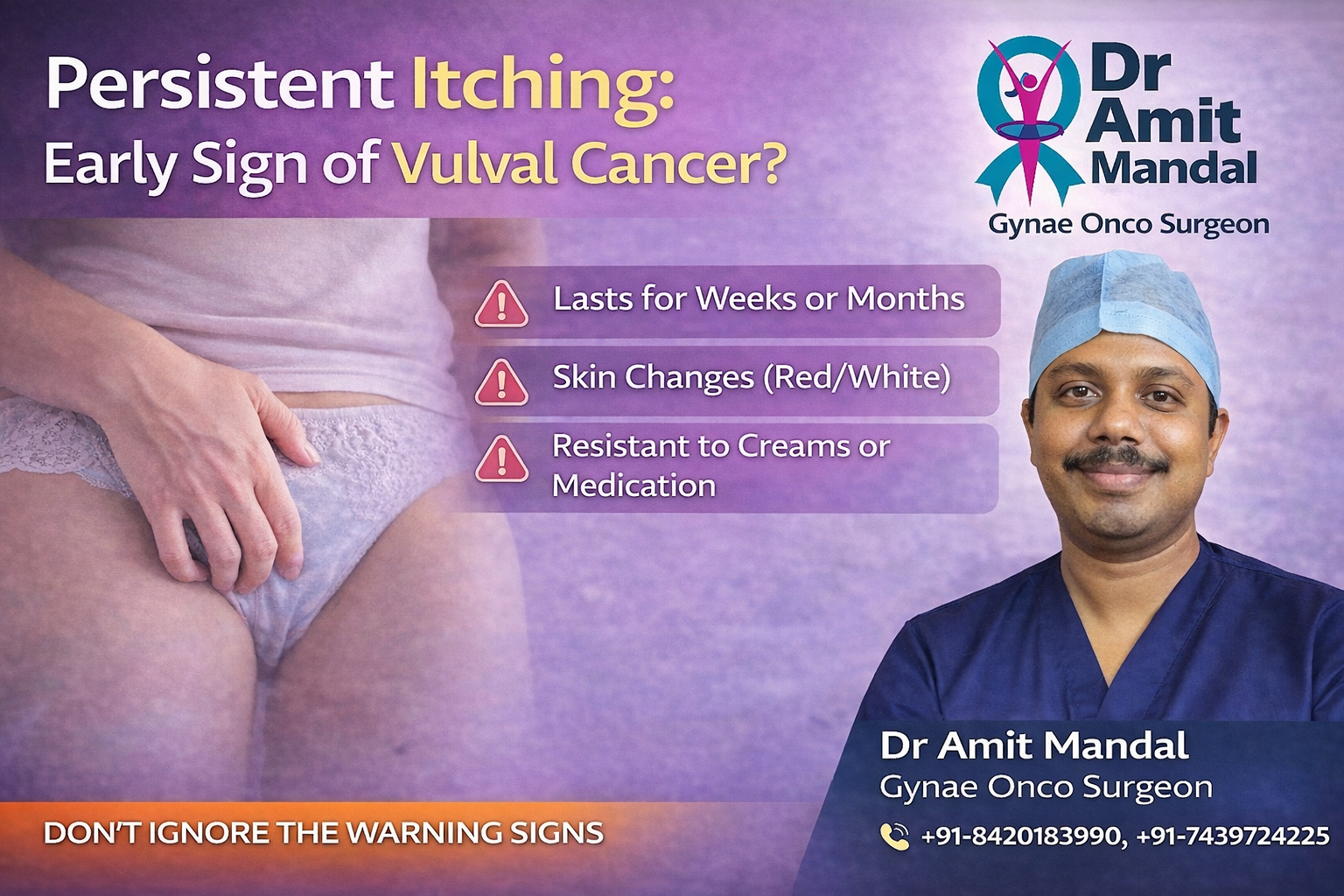
Persistent Itching: Early Sign of Vulval Cancer? | Dr Mandal
Posted on: Dec 27, 2025
Persistent Itching: Early Sign of Vulval Cancer?
Persistent itching in the vulval area is a symptom many women feel uncomfortable discussing. Most assume it is due to fungal infection, allergy, or poor hygiene and often rely on over-the-counter creams for relief. While itching is commonly harmless, itching that does not go away can sometimes be an early warning sign of vulval cancer.
In this detailed guide, Dr. Amit Mandal, an experienced Gynae Onco Surgeon in Kolkata, explains when vulval itching is normal, when it becomes concerning, and how early diagnosis can prevent major complications.
What Is Vulval Itching?
Vulval itching refers to irritation, burning, or discomfort affecting the external female genital area. It may be mild or severe, constant or intermittent, and can significantly affect daily comfort and sleep.
Most women experience vulval itching at some point in life. However, itching that lasts for weeks or keeps returning despite treatment should always be evaluated.
Common and Harmless Causes of Vulval Itching
In many cases, vulval itching is caused by non-serious conditions that respond well to treatment.
- Fungal (yeast) infections
- Contact allergy to soaps, detergents, or sanitary products
- Skin dryness or irritation
- Tight clothing or synthetic underwear
- Hormonal changes, especially after menopause
These causes usually improve within days after proper treatment or lifestyle changes.
When Persistent Itching Becomes a Red Flag
According to Dr. Amit Mandal, vulval itching becomes concerning when it is:
- Persistent for more than 2–3 weeks
- Not responding to antifungal or anti-allergy treatment
- Associated with visible skin changes
- Accompanied by pain, burning, or sores
Ignoring persistent itching may delay diagnosis of serious conditions.
Understanding Vulval Cancer
Vulval cancer is a rare but serious gynecologic cancer that affects the outer genital skin. It usually develops slowly, often starting with subtle skin changes and itching long before pain or lumps appear.
Early symptoms are often mistaken for infections, which is why diagnosis is frequently delayed.
Why Itching Is an Early Symptom of Vulval Cancer
Cancerous changes in vulval skin can irritate nerve endings and cause chronic inflammation, leading to persistent itching. Unlike infections, this itching does not resolve with routine treatment.
Dr. Mandal explains that many women diagnosed with vulval cancer report itching as their first symptom, sometimes present for months or even years.
Warning Signs Along with Persistent Itching
Itching becomes more suspicious when combined with the following symptoms:
- Thickened or rough vulval skin
- White, red, or dark patches
- Non-healing sores or ulcers
- Bleeding or oozing from vulval skin
- Pain during sitting, walking, or intercourse
Any combination of these symptoms requires immediate medical evaluation.
Who Is at Higher Risk of Vulval Cancer?
- Women above 50 years of age
- Postmenopausal women
- History of HPV infection
- Chronic vulval skin conditions
- Smoking
- Weakened immune system
However, vulval cancer can also occur in younger women, making awareness essential at all ages.
Why Vulval Cancer Is Often Diagnosed Late
Several factors contribute to delayed diagnosis:
- Embarrassment discussing vulval symptoms
- Self-treatment with creams
- Misdiagnosis as fungal infection
- Ignoring symptoms due to lack of pain
Dr. Amit Mandal stresses that early consultation can prevent extensive surgery and improve outcomes.
How Persistent Itching Is Evaluated
Evaluation is simple and essential for accurate diagnosis.
- Detailed medical history
- Careful vulval examination
- Biopsy of suspicious skin areas
- HPV testing if required
A biopsy is a quick and safe procedure that confirms or rules out cancer.
Treatment Outcomes When Detected Early
Early-stage vulval cancer can often be treated with limited procedures and excellent outcomes.
- Smaller surgical excision
- Preservation of appearance and function
- Lower risk of recurrence
- Faster recovery
Delayed diagnosis may require extensive surgery and additional treatments.
Real Patient Experience
“I suffered from itching for almost a year and kept changing creams. When I finally consulted Dr. Amit Mandal, a biopsy confirmed early vulval cancer. Because it was detected early, treatment was simple and effective.” — Patient from Behala, Kolkata
When Should You See a Specialist Immediately?
- Itching lasting more than two weeks
- Visible skin color or texture changes
- Non-healing sores or ulcers
- Bleeding from vulval skin
- Pain or burning sensation
Early consultation saves lives and prevents aggressive treatment.
FAQs
- Is vulval itching always cancer? No, most cases are benign, but persistent itching must be evaluated.
- Can vulval cancer occur without pain? Yes, early stages often cause itching without pain.
- Is biopsy painful? No, it is a minor procedure performed under local anesthesia.
- Can young women get vulval cancer? Yes, although risk increases with age.
Conclusion
Persistent vulval itching should never be ignored. While it is often caused by minor conditions, it can sometimes be the earliest sign of vulval cancer. Listening to your body and seeking timely medical advice can make a life-saving difference.
If you are experiencing ongoing vulval itching or skin changes, consult Dr. Amit Mandal, a trusted Gynae Onco Surgeon in Kolkata, for accurate diagnosis and compassionate care.
Recent Posts
-
 Best Uterine Cancer Treatment in Kolkata: Expert Care & Advanced Therapies
-
 Top Cervical Cancer Doctor in Kolkata | Best Treatment & HPV Prevention
-
 Best Vulval Cancer Doctor in Kolkata: When & Where to Seek Help
-
 Endometrial cancer treatment in Kolkata | Dr. Amit Mandal
-
Menopausal Bleeding - A Warning Sign of Uterine Cancer? Symptoms & Treatment
Comments (0)
Post Your Comment