
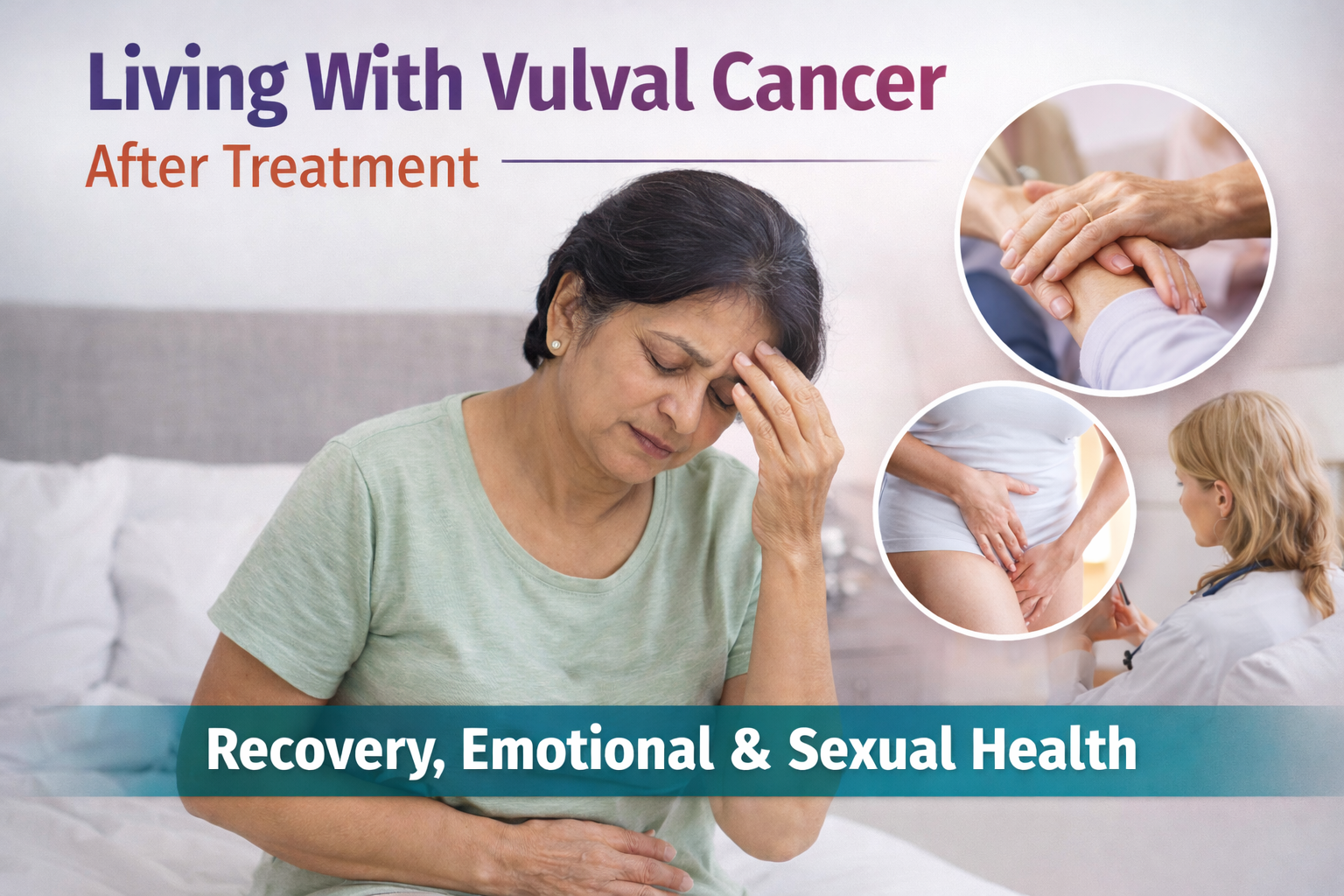
Living With Vulval Cancer: Recovery, Emotional & Sexual Health
Posted on: Feb 10, 2026
Living With Vulval Cancer: Emotional, Physical & Sexual Health After Treatment (2026 Guide)
Completing treatment for vulval cancer is a major milestone, but life after treatment brings its own set of challenges that are rarely discussed openly. Many women in Kolkata describe a mix of relief, anxiety, physical discomfort, and emotional vulnerability once hospital visits become less frequent. This guide is written from a patient-first perspective to help women and their families understand what recovery really looks like after vulval cancer treatment, and how to rebuild emotional confidence, physical comfort, and intimate wellbeing over time.
Understanding the Recovery Phase After Vulval Cancer
Recovery from vulval cancer is not limited to wound healing. It includes adapting to changes in body image, regaining physical comfort, and managing the emotional impact of having faced a life-threatening illness. Women who undergo surgery or radiation often report altered sensation, local discomfort, or fear of recurrence. Regular follow-up with a specialist is essential, and many patients find reassurance in structured survivorship care guided by experienced teams such as those discussed in Best Vulval Cancer Specialist Doctor in Kolkata.
Emotional Health After Vulval Cancer Treatment
Many women experience emotional ups and downs after treatment. The initial relief of “treatment is over” can be followed by fear of recurrence, anxiety before follow-up visits, or sadness related to changes in the body. Some women describe feeling isolated because vulval cancer is rarely talked about openly. Psychological support, counselling, and patient support groups can help normalize these emotions and rebuild confidence in daily life.
Physical Recovery and Long-Term Body Changes
Physical healing after vulval cancer varies from person to person. Some women recover quickly from minor procedures, while others need more time after extensive surgery or radiation therapy. Common physical concerns include persistent tenderness, changes in skin sensitivity, swelling, and occasional discomfort during daily activities. Gentle physiotherapy, skin care routines, and gradual return to normal movement can help improve comfort over time.
Sexual Health and Intimacy After Vulval Cancer
Changes in sexual comfort and desire are common after vulval cancer treatment, yet many women hesitate to raise these concerns. Physical changes may lead to dryness, tightness, or discomfort, while emotional factors such as fear of pain or body image concerns can reduce intimacy. Open communication with partners and doctors, use of appropriate supportive measures, and guidance from specialists can gradually restore comfort and confidence in intimate relationships.
Daily Life, Work, and Social Reintegration
Returning to work and social routines after vulval cancer treatment can feel overwhelming. Fatigue, reduced stamina, or fear of being treated differently may hold women back. Gradual reintegration into daily responsibilities, supportive workplace environments, and understanding from family members play an important role in restoring a sense of normalcy.
Follow-Up Care and Monitoring for Recurrence
Regular follow-up visits are essential after vulval cancer treatment to monitor healing and detect any signs of recurrence early. Follow-up schedules are personalised based on initial stage and treatment type. Women who have experienced other gynecological cancers or are at risk may benefit from broader oncological guidance, such as information available in Endometrial Cancer Treatment in Kolkata and cervical cancer care pathways discussed in Best Cervical Cancer Specialist in Kolkata.
Building a Support System After Cancer
Healing is not just a medical process; it is deeply social and emotional. Family members, close friends, survivor networks, and healthcare teams together form the support system that helps women navigate life after vulval cancer. Sharing experiences with others who have faced similar challenges often reduces feelings of isolation and empowers women to advocate for their own health needs.
When to Seek Medical Advice After Treatment
Any new symptoms such as persistent pain, new skin changes, unexplained swelling, bleeding, or unusual discharge should be reported promptly to your care team. Early evaluation of new symptoms allows timely intervention and peace of mind during survivorship.
Recent Posts
-
 Best Uterine Cancer Treatment in Kolkata: Expert Care & Advanced Therapies
-
 Top Cervical Cancer Doctor in Kolkata | Best Treatment & HPV Prevention
-
 Best Vulval Cancer Doctor in Kolkata: When & Where to Seek Help
-
 Endometrial cancer treatment in Kolkata | Dr. Amit Mandal
-
Menopausal Bleeding - A Warning Sign of Uterine Cancer? Symptoms & Treatment
Comments (0)
Post Your Comment