
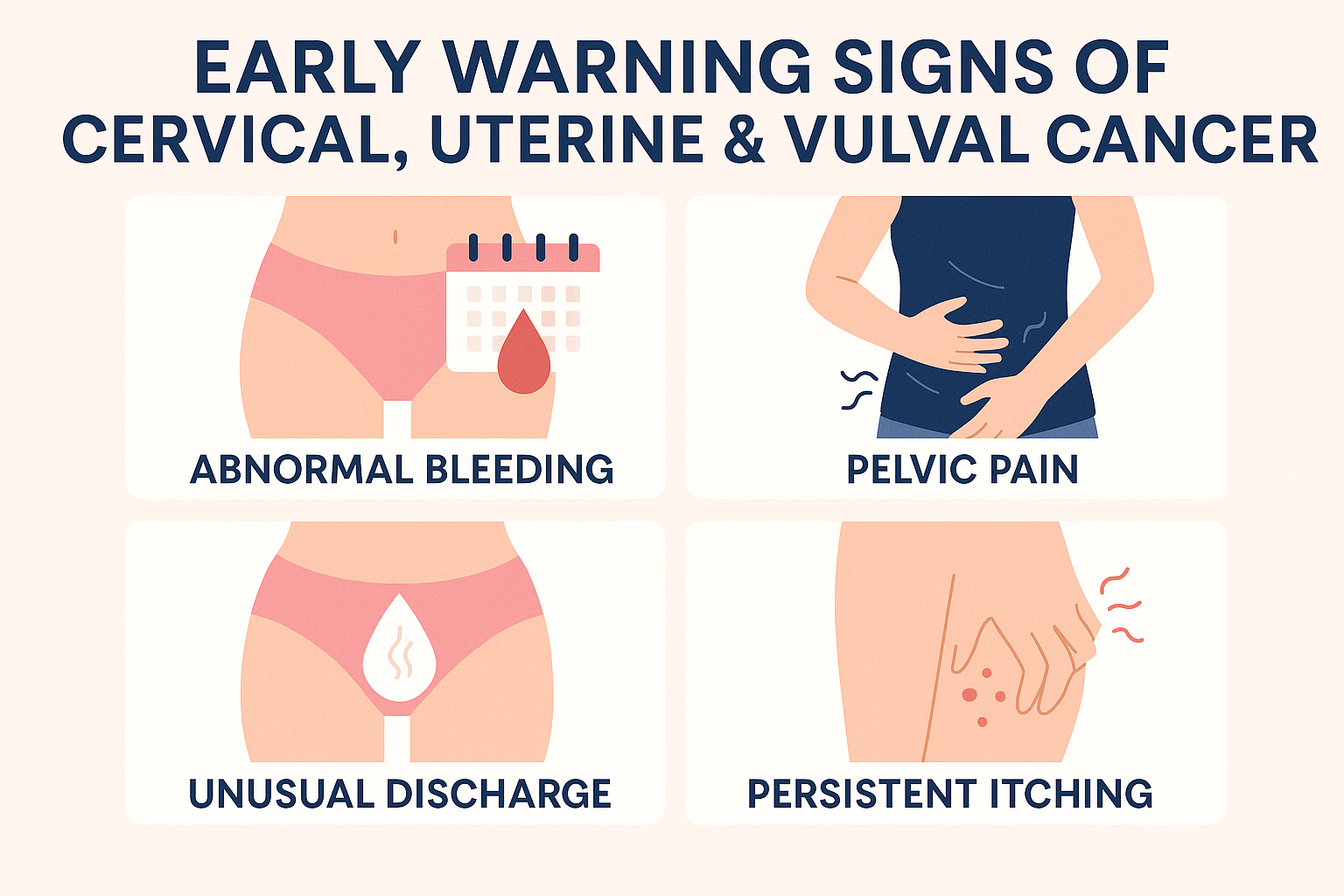
Irregular Bleeding After 40: Is It Cancer? | Dr. Amit Mandal Kolkata
Posted on: Apr 05, 2026
Irregular Bleeding After 40: Is It Cancer? A Doctors Perspective by Dr. Amit Mandal
Irregular bleeding after the age of 40 is something I see almost every day in my clinic. Many women come in with hesitation. Some feel embarrassed to talk about it. Others assume it is just a normal part of ageing or menopause.
Let me say this clearly, based on years of clinical experience: irregular bleeding is not always a sign of cancer, but it is never something to ignore.
In many cases, the cause is simple and treatable. But in some cases, it can be the earliest sign of a serious condition, including cancer of the uterus. The challenge is that the symptoms often look very similar in the beginning. That is why proper evaluation becomes important.
Understanding what irregular bleeding really means
Many patients think irregular bleeding only means heavy periods. That is not entirely correct.
When I take a detailed history, I usually find one or more of the following:
- Bleeding between two periods
- Periods becoming unusually heavy or prolonged
- Cycles becoming unpredictable
- Spotting after physical intimacy
- Bleeding after menopause
Even a small change from your usual pattern can be significant after the age of 40. Your body has followed a rhythm for years. When that rhythm changes, it deserves attention.
Why bleeding patterns change after 40
At this stage of life, the body begins to move toward menopause. This phase, known as perimenopause, brings hormonal fluctuations. Estrogen and progesterone levels do not remain stable, and this can affect the uterine lining.
Because of this, many women experience irregular cycles. This is the most common and often harmless reason.
However, as a specialist, I do not assume hormones are the only cause. There are several other conditions that can lead to abnormal bleeding:
- Uterine fibroids
- Endometrial polyps
- Thyroid disorders
- Thickening of the uterine lining (hyperplasia)
- Infections or inflammation
And then there is a possibility we must always consider carefully, which is endometrial cancer.
This does not mean every patient has cancer. In fact, most do not. But the possibility is real enough that it should not be ignored.
What I have observed in real patients
There is one pattern I have seen repeatedly over the years. Women tend to delay.
A patient in her mid-forties once came to me with mild spotting between periods. She had noticed it for several months but kept postponing consultation, assuming it was due to stress.
When we investigated, we found early changes in the uterine lining that required prompt treatment. Fortunately, it was detected at a stage where management was straightforward.
This is why I always say that symptoms should not be judged based on severity alone. Even mild symptoms can carry important information.
When irregular bleeding should not be ignored
- Bleeding after menopause, even if it happens once
- Sudden heavy bleeding after years of normal cycles
- Persistent spotting between periods
- Bleeding after intercourse
- Associated pelvic discomfort
These are not conditions where waiting for a few more months is advisable. Early consultation makes a significant difference.
Is cancer common in such cases
This is one of the most frequent questions I get.
The honest answer is that most cases of irregular bleeding are not due to cancer. However, the risk increases with age, especially after 40.
There are certain factors that increase the likelihood:
- Excess body weight
- Diabetes
- High blood pressure
- History of PCOS
- Family history of cancer
- Late menopause
When these factors are present, I recommend a more thorough evaluation without delay.
How we find the exact cause
Many patients feel anxious about tests, but most of the diagnostic methods are simple and quick.
The process usually includes:
- Ultrasound examination to assess uterine lining and detect fibroids or polyps
- Endometrial biopsy to rule out precancerous or cancerous changes
- Pap smear for cervical screening
- Blood tests to evaluate hormonal or thyroid-related causes
These tests allow us to move from assumption to certainty.
Why early diagnosis matters
One of the most reassuring things I tell my patients is that if detected early, cancers of the uterus are highly treatable.
When diagnosed at an early stage:
- Treatment is less complicated
- Recovery is faster
- Outcomes are very good
On the other hand, delayed diagnosis can lead to more extensive treatment and a more challenging recovery process.
The difference between early and late detection is often just a matter of timing.
When you should see a specialist
You do not need to wait for severe symptoms to appear.
If you are above 40 and notice any change in your bleeding pattern, it is reasonable to consult a specialist such as Dr. Amit Mandal.
You should especially consider consultation if:
- Symptoms continue for more than two cycles
- You have any risk factors mentioned earlier
- You feel uncertain or concerned about your symptoms
Most of the time, patients leave reassured. And if something is detected, it is addressed early.
A message for women in Kolkata
In a busy city, it is easy to delay health check-ups. Work, family, and responsibilities often take priority.
But health should not be postponed.
A simple consultation can provide clarity and prevent complications later. It is not just about diagnosing disease, but also about maintaining long-term well-being.
Common misunderstandings I hear often
Many women come with certain assumptions that need correction.
Some believe that irregular bleeding is always part of menopause. While it can be, it is not the only reason.
Others feel that if it were something serious, the symptoms would be severe. In reality, early stages of serious conditions can present with very mild symptoms.
There is also a tendency to wait and observe for months. This delay is often unnecessary and sometimes risky.
A practical approach you can follow
- Track your menstrual cycle regularly
- Note any unusual patterns
- Do not ignore even minor changes
- Seek medical advice early
This approach is not about fear. It is about awareness and timely action.
Final words from clinical experience
Over the years, I have seen many patients who came early and left reassured. I have also seen patients who delayed and required more complex treatment.
Irregular bleeding after 40 is not something to panic about, but it is also not something to ignore.
It is a signal. And like any signal, it is best understood early.
If evaluated on time, most conditions can be managed effectively. And if it is something serious, early diagnosis can make a significant difference in outcome.
What you should do next
If you or someone in your family is experiencing irregular bleeding, do not rely on guesswork.
Consult a qualified specialist, get the necessary evaluation done, and understand the cause.
Clarity is always better than uncertainty when it comes to health.
Frequently Asked Questions
Is irregular bleeding after 40 always cancer?
No, most cases are not cancer. However, the risk increases after 40, so proper evaluation is important to rule out serious conditions.
When should I worry about abnormal bleeding?
You should consult a doctor if you experience bleeding after menopause, heavy bleeding, spotting between periods, or bleeding after intercourse.
Which test is best for irregular bleeding?
Ultrasound and endometrial biopsy are the most important tests to identify the cause of abnormal uterine bleeding.
Can hormonal imbalance cause irregular bleeding?
Yes, hormonal changes during perimenopause are a common reason, but they should not be assumed without proper diagnosis.
Who is the best doctor for irregular bleeding in Kolkata?
You should consult a gynecologic cancer specialist like Dr. Amit Mandal for accurate diagnosis and treatment.
Recent Posts
-
 Best Uterine Cancer Treatment in Kolkata: Expert Care & Advanced Therapies
-
 Top Cervical Cancer Doctor in Kolkata | Best Treatment & HPV Prevention
-
 Best Vulval Cancer Doctor in Kolkata: When & Where to Seek Help
-
 Endometrial cancer treatment in Kolkata | Dr. Amit Mandal
-
Menopausal Bleeding - A Warning Sign of Uterine Cancer? Symptoms & Treatment
Comments (0)
Post Your Comment