
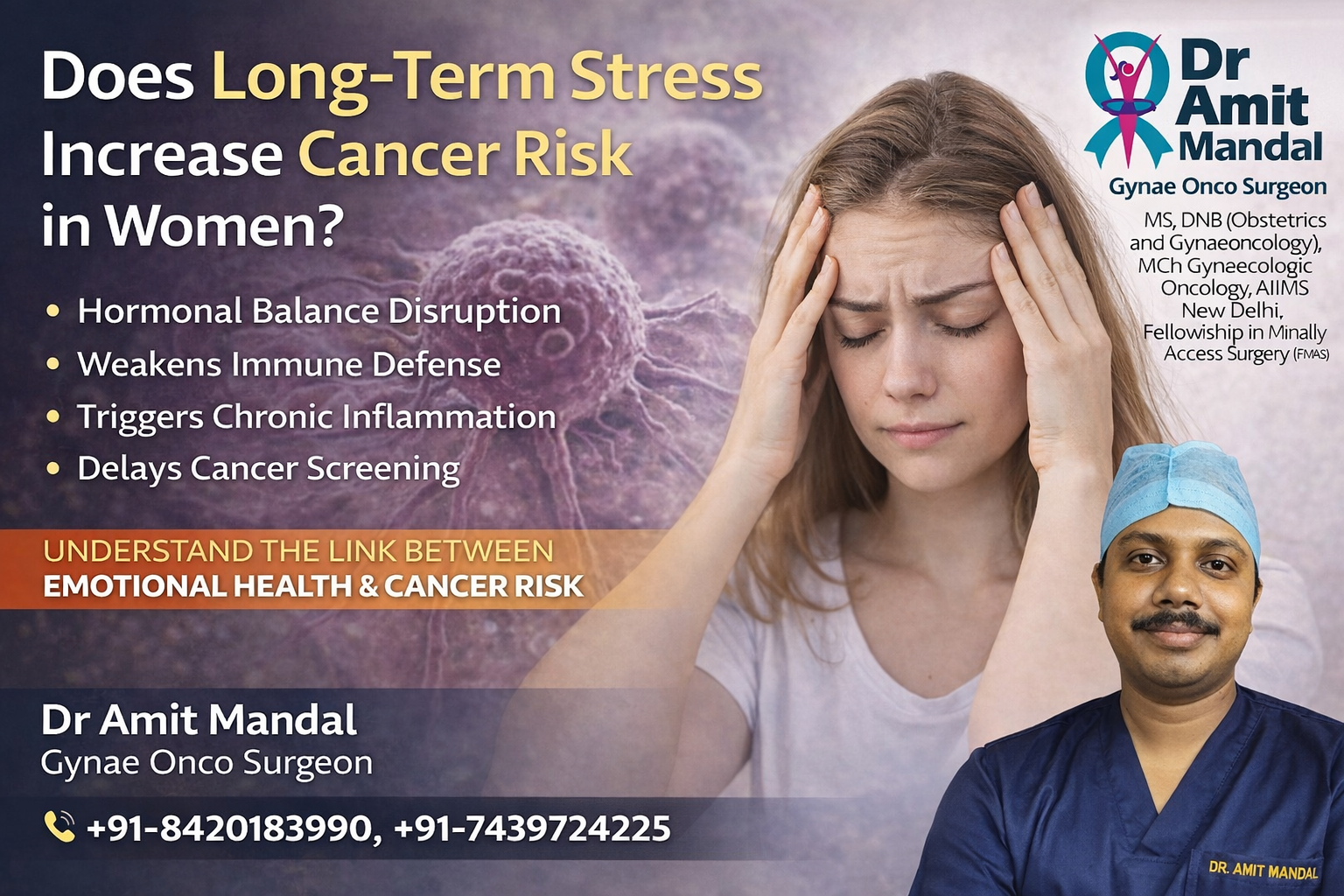
Does Long-Term Stress Increase Cancer Risk in Women? Explained by Dr. Amit Mandal
Posted on: Dec 03, 2025
Does Long-Term Stress Increase Cancer Risk in Women? Explained by Dr. Amit Mandal
Stress has become an unavoidable part of modern life. From managing careers and households to emotional responsibilities and financial pressure, women often carry a heavier mental load than they realize. While short-term stress is a normal biological response, long-term or chronic stress can silently disrupt the body in ways many women overlook. One growing concern among doctors is the possible link between prolonged stress and cancer risk in women.
In this in-depth guide, Dr. Amit Mandal, a leading gynecologic cancer specialist in Kolkata, explains how chronic stress affects the female body, whether it can increase cancer risk, and what women can do to protect their long-term health.
Understanding Stress: Acute vs Long-Term Stress
Stress is the bodys natural response to perceived danger or pressure. When faced with a challenge, the body releases hormones like cortisol and adrenaline to help cope. This response is helpful in short bursts but becomes harmful when stress continues for months or years.
Acute stress is temporary and resolves once the situation improves. Chronic stress occurs when emotional or physical pressure remains constant, without adequate recovery time.
Women experiencing chronic stress may not always feel stressed in the traditional sense. Instead, symptoms appear gradually as fatigue, hormonal imbalance, poor sleep, anxiety, or frequent illness.
How Chronic Stress Affects the Female Body
Long-term stress does not affect just the mind it alters multiple biological systems that are closely linked to cancer development.
- Disruption of hormonal balance
- Weakening of immune surveillance
- Chronic inflammation in tissues
- Increased oxidative stress at the cellular level
- Poor DNA repair mechanisms
According to Dr. Amit Mandal, these changes do not directly cause cancer overnight, but they create an internal environment where abnormal cells are more likely to grow unchecked.
The Stress Hormone Cancer Connection in Women
Womens bodies are particularly sensitive to stress because stress hormones directly influence estrogen and progesterone balance. Long-standing hormonal imbalance can affect tissues such as:
- Cervix
- Uterus (endometrium)
- Ovaries
- Breast tissue
Elevated cortisol levels over long periods may interfere with normal cell regulation, increasing the risk of abnormal cell growth, especially when combined with other risk factors like obesity, poor diet, or lack of screening.
Can Stress Weaken the Immune Systems Cancer Defense?
One of the most critical roles of the immune system is identifying and destroying abnormal or pre-cancerous cells before they become dangerous. Chronic stress suppresses immune activity, reducing the bodys ability to perform this protective function.
Dr. Amit Mandal explains that women under prolonged emotional stress often experience:
- Frequent infections
- Delayed healing
- Persistent fatigue
- Increased inflammation
When immune surveillance weakens, abnormal cells may survive longer and accumulate genetic damage, increasing the likelihood of cancer development over time.
Stress, Lifestyle Changes, and Indirect Cancer Risk
Stress rarely acts alone. It often triggers lifestyle patterns that further increase cancer risk, especially in women balancing multiple responsibilities.
- Irregular sleep patterns
- Emotional eating or poor nutrition
- Lack of physical activity
- Smoking or alcohol as coping mechanisms
- Skipping routine health checkups
These indirect effects of stress significantly contribute to obesity, insulin resistance, and hormonal disturbances all known risk factors for gynecologic cancers.
Does Stress Increase the Risk of Cervical Cancer?
Cervical cancer is primarily caused by persistent HPV infection. However, chronic stress may play an indirect role by weakening the immune systems ability to clear HPV naturally.
Women under long-term stress may:
- Clear HPV infection more slowly
- Delay Pap smear screening
- Ignore early symptoms due to exhaustion
Dr. Amit Mandal emphasizes that stress does not replace HPV as a cause but can worsen disease progression when screening and immune response are compromised.
Stress and Uterine (Endometrial) Cancer Risk
Uterine cancer is strongly associated with estrogen dominance, obesity, and metabolic disorders all of which are influenced by chronic stress.
Long-term stress can:
- Increase abdominal fat
- Disrupt insulin regulation
- Alter estrogen metabolism
- Delay diagnosis due to ignored symptoms
Women experiencing chronic stress often dismiss abnormal bleeding or pelvic discomfort until symptoms become severe.
Can Stress Contribute to Vulval Cancer?
Vulval cancer risk is influenced by immune suppression, chronic inflammation, and delayed diagnosis. Stress-related immune weakening may allow persistent skin changes or infections to progress unnoticed.
Women under emotional stress often normalize itching, irritation, or discomfort, attributing symptoms to hygiene or skin sensitivity rather than seeking medical evaluation.
Psychological Stress After Cancer Diagnosis
Stress does not end with diagnosis. Emotional distress after a cancer diagnosis can affect treatment response and recovery.
Dr. Amit Mandal integrates emotional reassurance into treatment planning, ensuring that patients understand their condition and feel supported throughout their care journey.
Real Patient Experience
“I ignored abnormal bleeding for months because I was overwhelmed caring for my family. When I finally met Dr. Amit Mandal, he explained how stress had delayed my diagnosis. Thankfully, my cancer was caught early and treated successfully.” — Patient from South Kolkata
How Women Can Reduce Stress-Related Health Risks
Managing stress is not about eliminating challenges but improving resilience and awareness.
- Prioritize regular sleep cycles
- Maintain routine physical activity
- Practice stress-reduction techniques such as yoga or meditation
- Seek emotional support when overwhelmed
- Do not postpone medical checkups
Dr. Mandal strongly advises women not to ignore bodily symptoms, regardless of life pressures.
When Should Women Seek Medical Advice?
- Unexplained or irregular vaginal bleeding
- Persistent pelvic pain or pressure
- Long-lasting vulval itching or skin changes
- Unusual vaginal discharge
- Postmenopausal spotting
If stress is affecting your health awareness or delaying medical care, consulting a specialist can provide clarity and reassurance. You can book an appointment with Dr. Amit Mandal for expert evaluation and guidance.
FAQs
- Can stress alone cause cancer? No, but chronic stress can increase vulnerability by weakening immune defense and promoting hormonal imbalance.
- Does managing stress reduce cancer risk? Yes. Stress management improves immune function, hormonal balance, and health-seeking behavior.
- Should stressed women undergo more frequent screening? Regular screening is essential, especially if symptoms are present or appointments are often delayed.
- Is emotional health addressed during cancer treatment? Yes. Emotional well-being plays a crucial role in recovery and treatment outcomes.
Conclusion
Long-term stress may not directly cause cancer, but it creates biological and behavioral conditions that increase risk, delay diagnosis, and complicate treatment. Women must recognize stress as a serious health factor and not dismiss physical symptoms due to emotional overload.
For expert guidance, accurate diagnosis, and compassionate gynecologic cancer care, consult Dr. Amit Mandal, a trusted specialist dedicated to womens long-term health and recovery.
Recent Posts
-
 Best Uterine Cancer Treatment in Kolkata: Expert Care & Advanced Therapies
-
 Top Cervical Cancer Doctor in Kolkata | Best Treatment & HPV Prevention
-
 Best Vulval Cancer Doctor in Kolkata: When & Where to Seek Help
-
 Endometrial cancer treatment in Kolkata | Dr. Amit Mandal
-
Menopausal Bleeding - A Warning Sign of Uterine Cancer? Symptoms & Treatment
Comments (0)
Post Your Comment