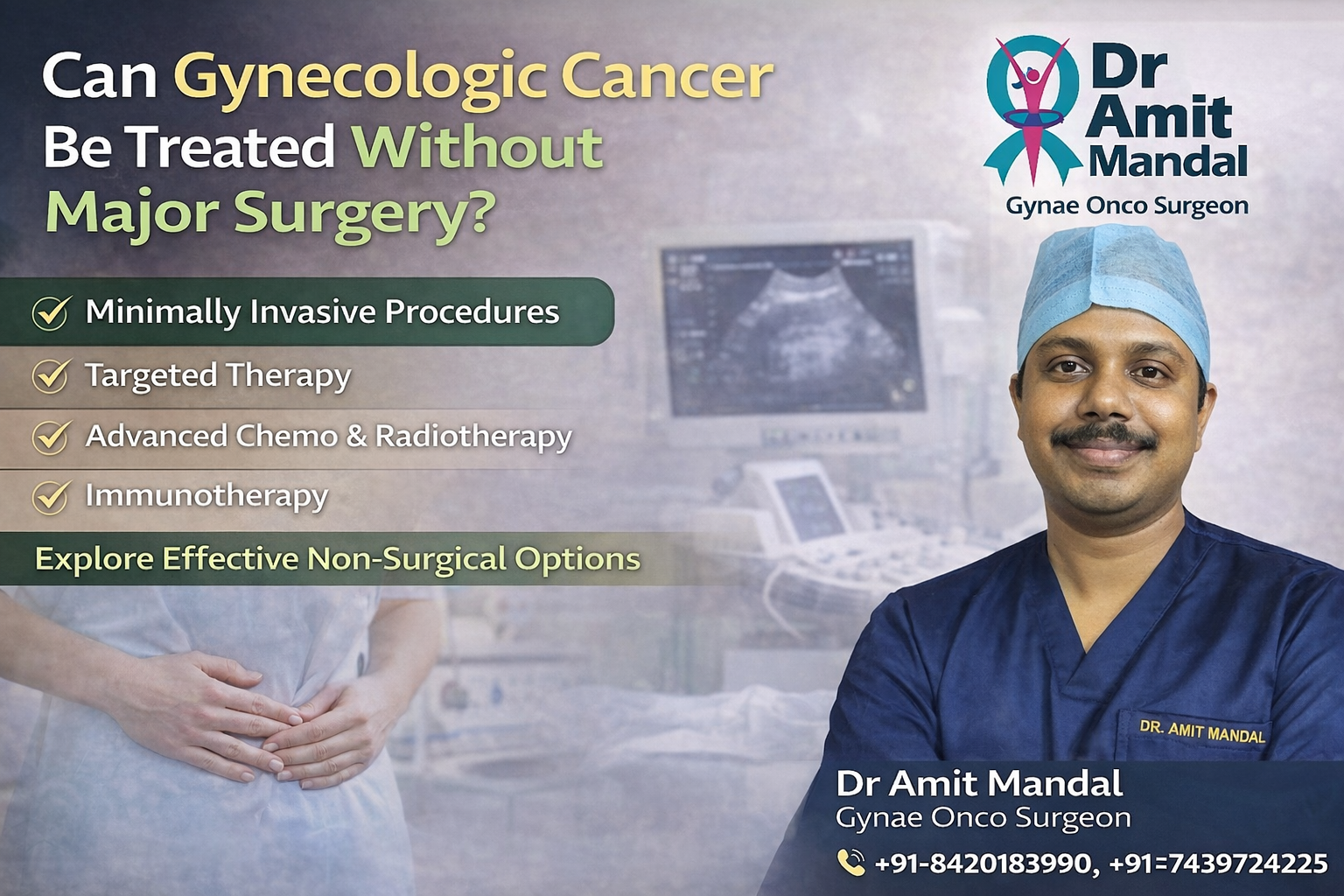
Can Gynecologic Cancer Be Treated Without Major Surgery?
Posted on: Dec 10, 2025
Can Gynecologic Cancer Be Treated Without Major Surgery?
For many women, the word cancer immediately brings fear of major surgery, long hospital stays, and prolonged recovery. One of the most common questions patients ask is whether gynecologic cancers can be treated without undergoing extensive surgical procedures. The answer, in many cases, is yes depending on the type, stage, and individual health condition.
In this detailed guide, Dr. Amit Mandal, a leading Gynae Onco Surgeon in Kolkata, explains when gynecologic cancer can be managed without major surgery, what alternatives are available, and how modern treatment strategies are delivering excellent outcomes with less physical trauma.
Understanding Gynecologic Cancer Treatment Options
Gynecologic cancers include cancers of the cervix, uterus (endometrium), ovaries, vulva, and vagina. Traditionally, surgery was the primary treatment for many of these conditions. However, advances in medical science have expanded treatment choices significantly.
Today, treatment planning is personalized and may involve:
- Minimally invasive surgery
- Chemotherapy or radiotherapy
- Targeted therapy
- Hormonal treatment
- Immunotherapy
The goal is always to achieve the best cancer control with the least impact on the patients quality of life.
What Does Major Surgery Mean in Cancer Care?
Major surgery typically refers to open surgical procedures involving large incisions, longer hospital stays, and extended recovery periods. These procedures may involve removal of reproductive organs, lymph nodes, or surrounding tissues.
While major surgery is still necessary in some advanced cases, many early and selected intermediate-stage cancers can now be treated using less invasive approaches.
When Can Gynecologic Cancer Be Treated Without Major Surgery?
According to Dr. Amit Mandal, avoiding major surgery is possible in several scenarios:
- Early-stage cancer detected through screening
- Pre-cancerous or low-grade lesions
- Cancers sensitive to radiation or chemotherapy
- Patients with medical conditions that make surgery risky
- Cases where fertility preservation is a priority
Each case is evaluated individually to ensure safety and effectiveness.
Minimally Invasive Procedures: Surgery Without Big Incisions
When surgery is required, minimally invasive techniques often replace open surgery. These include laparoscopic and advanced access procedures that significantly reduce trauma.
- Smaller incisions
- Less blood loss
- Reduced postoperative pain
- Shorter hospital stay
- Faster recovery
Dr. Amit Mandal is fellowship-trained in minimally access surgery, allowing eligible patients to benefit from these advanced techniques.
Can Cervical Cancer Be Treated Without Major Surgery?
Early cervical cancer and pre-cancerous lesions are often managed without major surgery.
- Pre-cancerous changes may be treated with local procedures
- Early-stage cancer can sometimes be managed with radiotherapy
- Combined chemo-radiation may eliminate the need for open surgery
Timely Pap smear and HPV screening play a critical role in enabling non-surgical treatment.
Non-Surgical Options for Uterine (Endometrial) Cancer
Uterine cancer often presents early due to abnormal bleeding, making conservative treatment possible in select cases.
- Hormonal therapy for early-stage disease
- Radiation therapy as primary treatment when surgery is not suitable
- Targeted therapy for advanced or recurrent cases
In younger women, fertility-preserving treatment may be considered under strict medical supervision.
Managing Vulval Cancer Without Extensive Surgery
Vulval cancer treatment has evolved significantly. Early-stage disease may be managed with limited local procedures rather than extensive tissue removal.
- Localized excision instead of radical surgery
- Radiation therapy for selected cases
- Combination treatments to preserve function and appearance
Early diagnosis is crucial to avoid disfiguring surgeries.
The Role of Chemotherapy and Radiotherapy
Chemotherapy and radiotherapy are powerful tools that can sometimes replace surgery entirely or reduce the need for extensive procedures.
- Radiation destroys cancer cells locally
- Chemotherapy treats microscopic disease systemically
- Combined therapy can shrink tumors effectively
Dr. Mandal collaborates closely with medical and radiation oncologists to design balanced treatment plans.
Targeted Therapy and Immunotherapy
Modern cancer care includes advanced treatments that work at the molecular level.
- Targeted therapy attacks specific cancer pathways
- Immunotherapy strengthens the bodys immune response
- Fewer side effects compared to traditional chemotherapy
These therapies are especially helpful in recurrent or advanced cancers where surgery is not ideal.
Real Patient Experience
“I was terrified of losing my uterus and undergoing major surgery. Dr. Amit Mandal explained alternative treatment options clearly. With timely radiotherapy and follow-up care, I avoided major surgery and returned to normal life sooner than expected. - Patient from Salt Lake, Kolkata
Why Early Diagnosis Makes Non-Surgical Treatment Possible
The possibility of avoiding major surgery depends heavily on early detection.
- Regular screening detects cancer at a treatable stage
- Smaller tumors respond better to non-surgical therapy
- Complications and recovery time are reduced
Dr. Mandal emphasizes that ignoring symptoms often limits treatment choices.
Who Is an Ideal Candidate for Non-Surgical Cancer Treatment?
- Women diagnosed at an early stage
- Patients with significant medical risks for surgery
- Those seeking fertility-preserving options
- Women with cancers responsive to radiation or medication
Every patient undergoes detailed evaluation before finalizing the treatment plan.
What Patients Can Expect During Treatment
- Clear explanation of available options
- Stage-based treatment planning
- Regular monitoring and imaging
- Post-treatment follow-up to detect recurrence early
Dr. Amit Mandal ensures that patients remain informed and supported throughout their journey.
FAQs
- Is surgery always avoidable? No. Some cancers require surgery for complete control, but many cases now have alternatives.
- Are non-surgical treatments effective? Yes, when selected appropriately and monitored closely.
- Do non-surgical treatments have side effects? Side effects exist but are often manageable with proper care.
- Can cancer return without surgery? Recurrence risk depends on cancer type, stage, and response to treatment.
Conclusion
Major surgery is no longer the only option for treating gynecologic cancer. With early diagnosis, expert evaluation, and modern treatment strategies, many women can achieve excellent outcomes without extensive surgical procedures.
If you or a loved one is facing a gynecologic cancer diagnosis and wants to explore treatment options beyond major surgery, consult Dr. Amit Mandal, a trusted Gynae Onco Surgeon in Kolkata known for personalized, evidence-based cancer care.
Recent Posts
-
 Best Uterine Cancer Treatment in Kolkata: Expert Care & Advanced Therapies
-
 Top Cervical Cancer Doctor in Kolkata | Best Treatment & HPV Prevention
-
 Best Vulval Cancer Doctor in Kolkata: When & Where to Seek Help
-
 Endometrial cancer treatment in Kolkata | Dr. Amit Mandal
-
Menopausal Bleeding - A Warning Sign of Uterine Cancer? Symptoms & Treatment
Comments (0)
Post Your Comment